A major new agreement between NextEra Energy and Google Cloud is set to accelerate the construction of large-scale US data center campuses, backed by fresh electricity generation built specifically to serve AI-driven computing growth.
The partnership reflects a rapid shift underway in the American energy and technology sectors: data centers are multiplying faster than the existing power grid can serve them, and tech companies increasingly prefer to build or contract new generation directly rather than wait for utilities and regulators to catch up.
AI Drives Record US Power Demand
NextEra and Google already have 3.5 gigawatts (GW) of electricity generation either operating or contracted — enough to power around 2.5 million homes, a fact that underlines how quickly computing has become a major electricity consumer.
Short sentence.
And this is just the beginning.
The companies said Monday that their latest deal will involve multiple large-scale data center campuses in the US, each built alongside new electric generation assets rather than relying on the strained grid.
Financial terms and total added generating capacity were not disclosed, though executives emphasized the scale would be “material” over the coming years.
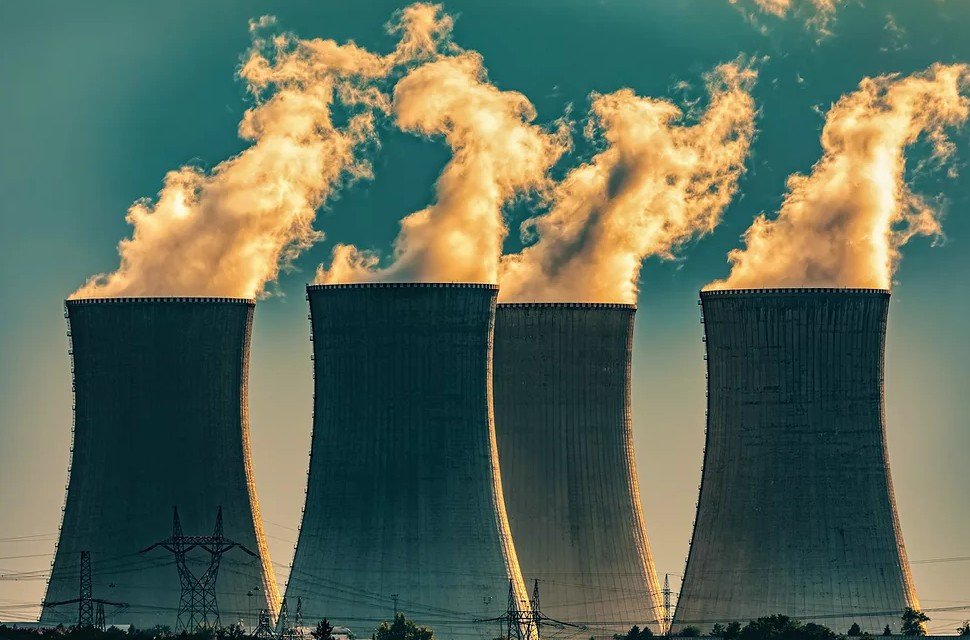
The announcement came as US peak electricity demand reached the highest levels ever recorded, driven by new AI workloads, cloud services, and computing infrastructure. Grid operators, regulators and utilities are wrestling with expansion backlogs, interconnection delays and planning friction.
Tech companies have responded by contracting their own energy infrastructure — a trend referred to in the industry as “bring-your-own-generation.” Analysts expect it to become a dominant feature of US energy development in the next decade.
NextEra Sees Competitive Edge in Utility-Led Buildouts
Speaking at an investor conference, NextEra CEO John Ketchum said the company has positioned itself uniquely to respond to the next wave of computing demand. “We are positioning our company around bring-your-own-generation, and we are uniquely positioned to win this,” he said.
One-sentence paragraph.
NextEra wants to be the go-to provider for AI-era power.
Unlike independent developers or lightly capitalized startups, major US utilities already have land access, permitting expertise, capital financing, grid interconnection experience and construction scale — making them powerful partners for hyperscale tech companies.
As early cloud pioneers, companies like Google, Microsoft, Meta and Amazon built data centers near existing utilities. But the AI era — with larger models, nonstop training cycles, and unprecedented computing workloads — requires massive continuous power consumption, which cannot always be satisfied by the legacy grid.
Why New Power Plants Are the Preferred Answer
For a typical AI data center campus, total draw can exceed the needs of an entire midsize American city. That makes construction dependent not simply on confirming grid access, but on guaranteeing round-the-clock power, redundancy, and expansion room.
A small bullet point list clarifies why tech leaders now pursue dedicated generation:
-
Grid interconnection queues are years long
-
Local utilities often lack immediate excess capacity
-
AI workloads require stable, continuous supply
-
Renewable projects alone cannot meet peak load without gas or batteries
-
Companies want control over pricing, reliability and emissions
One short line.
That model fits NextEra’s utility profile perfectly.
NextEra told investors it expects to add at least 15 gigawatts of new generation for data centers by 2035, and “possibly much more” depending on how quickly AI adoption accelerates.
Industry analysts see the number as conservative. Some expect total incremental demand from hyperscale projects to surpass 30 gigawatts nationally over the next decade if large language models, inference platforms and training compute continue scaling.
Google Cloud Wants Predictable Energy at Immense Scale
For Google Cloud, stable electricity access has become a strategic requirement, whether training AI models internally or providing enterprise-scale development tools to banks, pharmaceutical firms, automotive companies and government agencies.
Google has publicly pushed for carbon-neutral or carbon-free operation for years, but the complexity of AI-era data centers requires predictable base-load electricity, not just intermittent wind or solar.
The new deal allows Google to build campuses that can be powered by renewable sources, natural gas, battery storage or hybrid structures — depending on location and operational schedule.
One-sentence paragraph.
It also loosens dependence on congested regional grids.
By co-developing power assets, data center development is no longer bottlenecked by the slowest permitting or interconnection procedures in the surrounding region. Instead, electricity projects and data centers move in parallel.
Natural Gas and Carbon Capture Enter the Picture
To meet part of the increasing demand, NextEra announced a separate partnership with ExxonMobil to develop natural-gas-fired power plants equipped with carbon capture. These plants are expected to power AI-intensive data centers that require guaranteed, uninterrupted supply, especially in regions where renewable availability is inconsistent.
Natural gas with capture offers a “firm, dispatchable” profile — steady power on demand — while achieving lower emissions than conventional gas generation.
A one-sentence paragraph.
Tech companies are increasingly comfortable with hybrid energy mixes.
Many want to balance carbon goals with reliability and are willing to combine wind, solar and gas backed by capture technologies to avoid brownouts or scarcity.
AI-Powered Utility Tools Coming in 2026
NextEra and Google Cloud also plan to launch a grid management product powered by AI by mid-2026, designed to predict outages, equipment failures and other field-level problems.
The platform aims to improve reliability without requiring traditional field inspection models, enabling predictive maintenance, remote diagnostics, and operational intelligence for utilities and industrial campuses.
Short sentence.
Smart grids meet smart data.
Industry observers view this as a complementary step: power networks will need digital intelligence to keep pace with the intensity and speed of new computing infrastructure.
Market Reaction and Broader Landscape
NextEra shares dipped 1% by 17:22 GMT, reversing earlier premarket gains that followed initial deal reporting. Investors said near-term utility growth will not immediately translate into quarterly earnings bounce, but long-term contract visibility remains strong.
Analysts think NextEra stands to capture significant new demand from data center developers, not just hyperscale tech firms but also financial companies, biotech and governments experimenting with sovereign AI models.
A small table helps highlight the current landscape:
| Trend | Impact |
|---|---|
| AI workloads explode | Power use accelerates faster than utilities planned |
| Grid congestion | Companies seek their own generation |
| Gas with capture | Firms balance reliability and emissions |
| Hybrid development | Data centers and power plants built together |
| Predictive AI tools | Improves grid uptime and reduces failure risk |
One sentence for pacing.
The energy-AI intersection has become the defining industrial theme of the decade.
What Comes Next
Energy planners now expect US power demand curves to shift permanently upward rather than settle after temporary AI cycles. States with slower permitting or limited grid headroom — like Virginia, Georgia, Oregon and northern Texas — may see accelerated data-center projects tied to new plants rather than traditional grid sourcing.
NextEra could become a template: a regulated utility with the flexibility of a developer and the stability of a long-term service provider. With Google Cloud acting as both customer and platform partner, the venture gains technical sophistication and demand certainty.
Whether other utilities follow this model will partly depend on state regulators, grid constraints, and the willingness of tech companies to co-build projects rather than compete for existing electricity.
But one thing is certain: the AI boom has rewritten how America thinks about energy, and this partnership shows that the next generation of data centers will not wait on the past generation of grids.