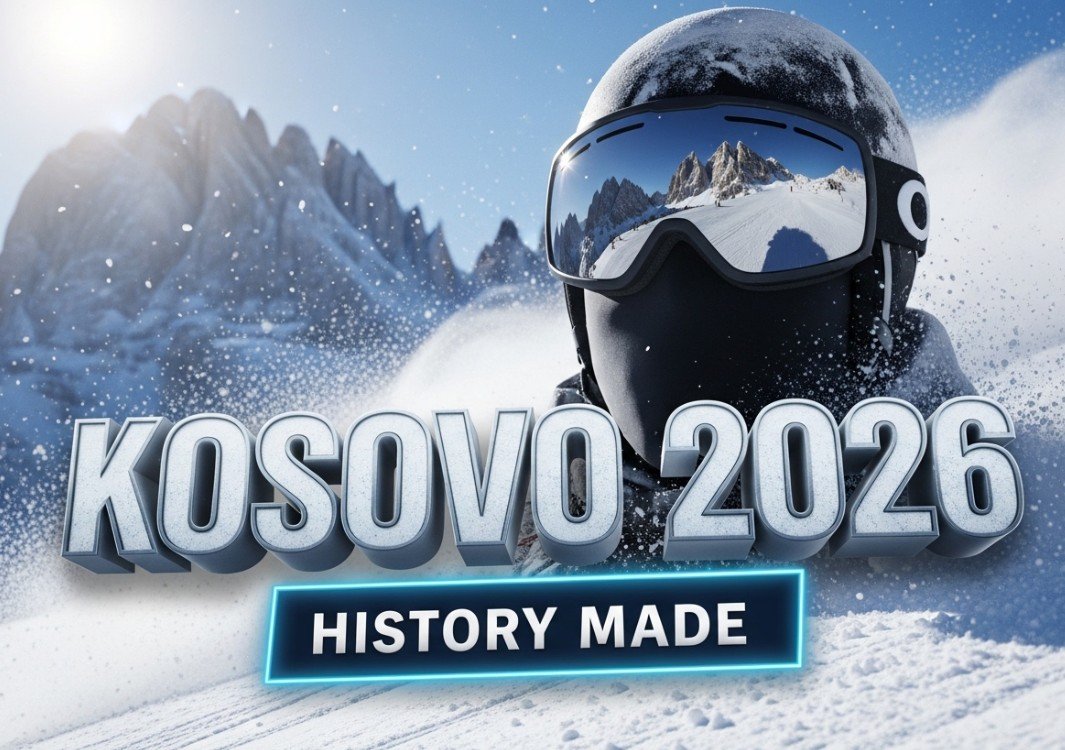
The flag of Kosovo is set to fly high over the Italian Alps this winter. In a significant milestone for the developing winter sports nation, two dedicated athletes have officially secured their tickets to the Winter Olympic Games Milano Cortina 2026. This announcement marks another historic chapter for the country as it continues to carve its name into the global sporting landscape.
Kiana Kryeziu and Drin Kokaj are the chosen duo who will carry the hopes of their nation. Their confirmation comes after a grueling qualification period that tested the limits of the country’s best skiers. Fans and sports officials alike are celebrating this achievement as a testament to the growing infrastructure and talent pool within Kosovo’s winter sports federation.
Leading the Charge on Italian Slopes
Kiana Kryeziu is returning to the Olympic stage with more experience and a broader repertoire of skills. She previously made history as the first female athlete to represent Kosovo at the Winter Olympics during the Beijing 2022 Games. Now, she is ready to push her limits even further in Italy.
Kiana Kryeziu’s 2026 Discipline List:
- Slalom: A technical event requiring rapid turns.
- Giant Slalom: The discipline she debuted with in Beijing.
- Super-Giant Slalom (Super-G): A speed event that demands immense courage.
Securing qualification in three separate disciplines is a massive leap forward for Kryeziu. It indicates her evolution from a debutant participant to a versatile competitor capable of handling both technical and speed events.
Drin Kokaj will join her to represent the men’s side. He has met the stringent qualification criteria for the slalom discipline. This will be a defining moment for Kokaj. He has spent years on the FIS circuit honing his technique on icy slopes across Europe to reach this pinnacle.
Navigating the Tough Qualification Path
The road to Milano Cortina was not straightforward for the Kosovo team. The qualification standards set by the International Ski Federation (FIS) are incredibly high. Athletes must lower their FIS points significantly in sanctioned races to even be considered eligible for the Olympics.
Internal competition was also fierce this cycle. The Kosovar team had other talented prospects vying for the limited spots available.
Selection Insight:
“The qualification process also included talents like Lirika Deva and Vokshi. However, strict Olympic quotas dictate that Kosovo is represented by one athlete per gender for these specific allocation spots.”
This rule meant that despite the hard work of skiers like Deva, the federation had to make the difficult decision based on the highest rankings and point calculations. It opened the path for Kryeziu and Kokaj, who stood out as the top performers in their respective categories.
The gender equity rule ensures balanced representation but also highlights the cutthroat nature of Olympic selection. Only the absolute best from the national pool can make the final cut.
Building a Winter Sports Legacy
Kosovo is a relatively new member of the Olympic family. The country made its debut at the Summer Olympics in Rio 2016 and its Winter Olympic debut in PyeongChang 2018. Since then, the trajectory has been pointing upward.
In 2018, Albin Tahiri was the sole representative. By 2022, the team doubled in size with the addition of Kryeziu. Maintaining this presence in 2026 confirms that winter sports in Kosovo are not a passing trend but a developing tradition.
Kosovo’s Winter Olympic Timeline:
| Year | Host City | Athletes | Key Achievement |
|---|---|---|---|
| 2018 | PyeongChang | 1 (Albin Tahiri) | Historic Debut |
| 2022 | Beijing | 2 (Tahiri, Kryeziu) | First Female Winter Olympian |
| 2026 | Milano Cortina | 2 (Kryeziu, Kokaj) | Expansion to Speed Events (Super-G) |
The participation of young athletes like Kokaj ensures the torch is passed to a new generation. It inspires children back home in Prishtina and the mountainous regions of Brezovica to take up skiing. The visibility of the Kosovo flag at the opening ceremony in Milan will be a powerful symbol of national identity and resilience.
The Challenge at Milano Cortina
The 2026 Games will be unique as they are spread across a wide region of Northern Italy. The alpine skiing events will take place in some of the most iconic and difficult venues in the world.
Kryeziu will likely face the slopes of Cortina d’Ampezzo. This venue is famous for the Tofane shoot, a terrifyingly steep section of the course. The sunlight changes rapidly there, making visibility a key challenge for the racers.
Kokaj will compete in the slalom. This event often sees high attrition rates where skiers straddle gates or crash out due to the aggressive course setting. He will need nerves of steel to complete two clean runs against the world’s best.
The proximity of Italy to Kosovo is also a major advantage. Unlike the empty stands in Beijing or the distant travel to Korea, Milano Cortina allows for Kosovar fans to potentially travel and support their team. The atmosphere is expected to be electric.
Both athletes have a few final weeks to tune their equipment and mental state. The focus now shifts from qualification to performance. The goal is no longer just to arrive, but to compete with pride and improve upon personal bests on the world’s biggest stage.