India is witnessing a massive shift in maritime logistics that could change how we move heavy goods forever. The Deendayal Port Authority in Kandla has successfully tested a cutting edge propulsion system developed by engineers at IIT Madras. This breakthrough paves the way for a futuristic Magnetic Levitation demonstration that promises to make port operations faster, cleaner and far more efficient than ever before.
Successful Test of Indigenous LIM Technology
The Deendayal Port Authority (DPA) in Kandla has officially cleared a major milestone in modernizing Indian infrastructure. They successfully commissioned and tested a new mobility solution based on Linear Induction Motor (LIM) technology. This prototype was designed entirely in India by TuTr Hyperloop, a deep tech startup incubated at the Indian Institute of Technology Madras.
This is not just a standard upgrade. Traditional ports rely heavily on diesel trucks and cranes that suffer from high friction and wear. The LIM technology replaces standard rotary motors. It produces linear force directly. This allows cargo to move along a track without the complex transmission systems found in conventional vehicles.
The successful trial proves that Indian engineering can handle high performance electromagnetic propulsion. This specific system is tailored for the heavy lifting required in port logistics. It validates the capability of local startups to solve massive industrial problems.
Next Step Is Magnetic Levitation
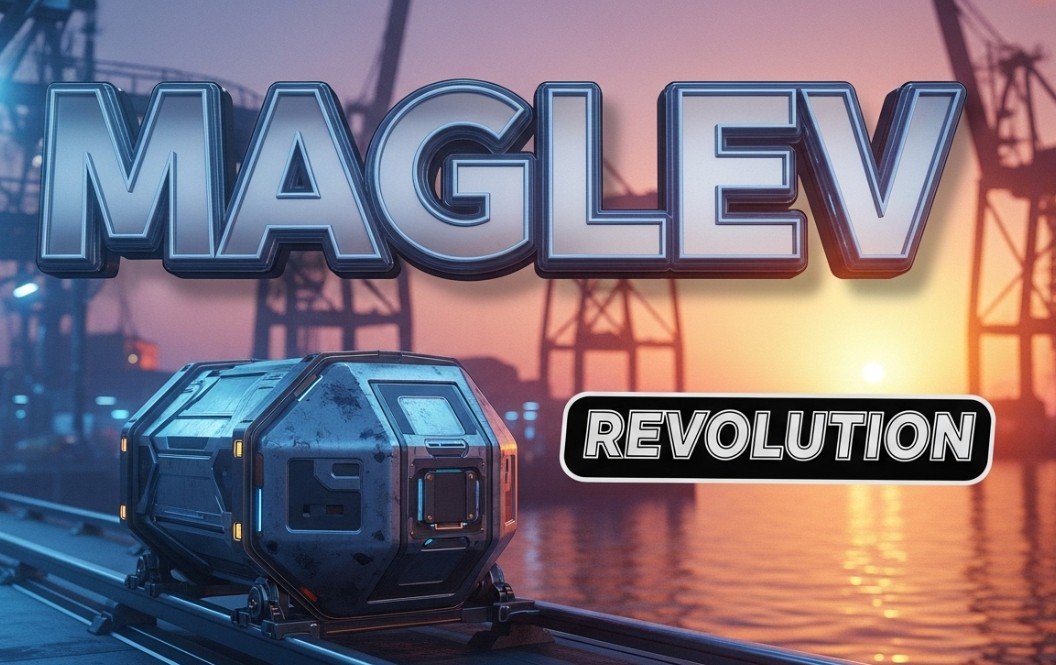
The port authority is not stopping at the motor test. The next phase is even more ambitious. DPA and TuTr Hyperloop are preparing for a Magnetic Levitation (Maglev) technology demonstration.
Maglev takes the concept of the Linear Induction Motor and adds a critical layer. It uses magnets to lift the cargo pods off the track. This means the heavy containers will essentially float on a cushion of magnetic fields while moving.
Eliminating contact between the vehicle and the track removes rolling friction entirely. This results in a dramatic reduction in energy consumption. It also means the equipment lasts much longer because parts do not grind against each other.
Dr. Aravind S. Bharadwaj, the Co-Founder of TuTr Hyperloop, expressed immense pride in this progression. He noted that moving to a Maglev demonstration is a natural step in their roadmap. The goal is to build world class mobility solutions that are designed and made in India for the global market.
Transforming Logistics with Deep Tech
The integration of such advanced technology places Kandla on the global map of smart ports. Most ports around the world are currently struggling with congestion and pollution. This indigenous solution addresses both issues head on.
Benefits of the Proposed Maglev System:
| Feature | Benefit for Port Operations |
|---|---|
| Contactless Movement | Near zero wear and tear means lower maintenance costs. |
| High Efficiency | Uses electricity instead of diesel, reducing the carbon footprint. |
| Automation Ready | Easier to integrate with digital tracking and smart logistics systems. |
| Indigenous IP | Reduces reliance on expensive foreign technology imports. |
This initiative is a direct application of the Atmanirbhar Bharat vision. It shows that Indian ports are willing to be the first adopters of risky but rewarding technology.
The collaboration highlights how academic research can transition into real world industrial applications. TuTr Hyperloop is taking laboratory concepts and proving them in the harsh, demanding environment of a working port. This proof of concept is vital. Once proven at Kandla, this system can be scaled to other major ports across the nation and the world.
Leadership and Vision for 2047
The leadership at Deendayal Port Authority has played a crucial role in this development. Sushil Kumar Singh, the Chairman of DPA, has actively supported this venture. He emphasized that the port is firmly committed to adopting future ready technologies.
His vision aligns with the Prime Minister’s goal of Viksit Bharat (Developed India) by 2047. This goal requires infrastructure that is not just functional but globally competitive.
Mr. Singh stated that the successful demonstration is a testament to India’s growing technological self reliance. He believes that Deendayal Port is leading the way among Indian ports by backing this deep tech innovation.
By allowing a startup to deploy a pilot project on site, the port authority has broken the traditional bureaucratic mold. This partnership model serves as a blueprint for other government bodies. It shows how to work effectively with the private sector to accelerate development.
The maritime sector is watching closely. If the upcoming Maglev demo delivers on its promises, it could trigger a wave of modernization across India’s coastline. We might soon see a network of silent, floating cargo movers replacing the noisy, polluting trucks that currently dominate our harbors.
The successful test of the LIM system and the upcoming Maglev demo at Deendayal Port marks a turning point for Indian logistics. It proves that India is ready to move beyond just using technology to actually creating it. This venture combines the academic brilliance of IIT Madras with the industrial strength of Kandla Port. It offers a glimpse into a cleaner and faster future for maritime trade.