
Visitors across Asia are trading brochures for VR headsets and projection-mapped forests as immersive tech attractions surge in popularity. From Singapore to Tokyo and Jeju, digital art spaces are quickly becoming some of the most talked-about travel stops of 2025.
A new wave of tourism is taking shape — one where light, sound, and virtual ecosystems are as central as beaches or museums. And travelers, especially younger ones, are absolutely eating it up.
Digital Art Spaces Become Global Travel Magnets
The rise of immersive tech attractions is no fluke. Travelers are craving experiences that feel personal, sensory, and, frankly, a little surreal. And as destinations roll out interactive projection rooms, VR forests, and reactive landscapes, the lines between travel, gaming, and art continue to blur.
Some tourism boards privately admit that immersive digital museums now bring in crowds that rival major cultural institutions. For cities that want fresh foot traffic, these attractions are becoming a powerful draw.
Singapore’s VR Forests Offer Calm in the Chaos
The ArtScience Museum in Singapore has leaned hard into immersive tech, and the results are obvious the moment you step inside.
The museum’s VR Gallery rotates high-concept virtual experiences, with visitors often queuing to try installations like We Live in an Ocean of Air. Two sentences in, and you realise this isn’t your usual museum moment.
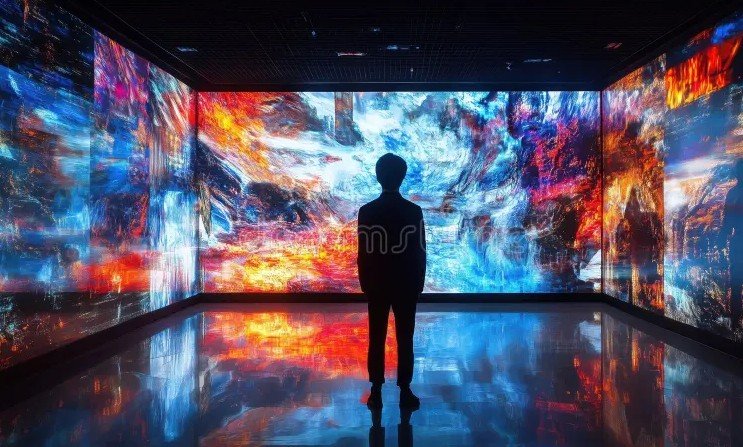
In this virtual forest, you breathe with the trees. Your movements ripple through the space. You watch leaves respond to your presence, which sounds a little weird until you try it.
It’s also surprisingly calming.
Another small detail sticks with a lot of visitors. One sentence: the entire exhibit feels like an emotional reset.
For a city obsessed with efficiency and movement, the gallery offers an unexpected pause.
The installations vary, but the mix of meditative VR journeys and high-energy interactive pieces keeps the gallery fresh.
A natural break for locals, and a striking surprise for tourists.
Tokyo’s Walk-Through Digital Worlds Reimagine Museums
TeamLab Planets in Tokyo goes a step further — literally. You walk through the art barefoot.
It starts simple. A shallow pool. Cool water on your ankles. Then digital koi glide beneath your feet as if you’ve stepped into an animated river.
Another room flips expectations again: a floating garden where flowers drift and respond as visitors pass through.
It’s almost dreamlike, like stepping into a painting that decided to wake up.
TeamLab Planets covers 10,000 square metres of interactive halls, mirrored floors, and reactive ecosystems. And because visitors physically move through the installations, each experience feels different.
One visitor summarized it perfectly in a quick comment I overheard: “I didn’t think art could feel alive, but here we are.”
Below is a quick summary of what people tend to highlight when comparing teamLab and similar attractions:
| Feature | teamLab Planets Tokyo | ArtScience Museum VR Gallery |
|---|---|---|
| Type of Experience | Walk-through digital immersion | Virtual reality-based installations |
| Sensory Focus | Touch, motion, visual interaction | Visual, audio, motion tracking |
| Visitor Style | Physical participation | Stationary VR engagement |
| Duration | Longer, room-to-room progression | Short sessions, rotating works |
The table doesn’t capture everything, obviously, but it helps show why both venues attract very different crowds.
Jeju’s Arte Museum Blends Digital Landscapes With Storytelling
Head to Jeju Island, and the vibe shifts again. The Arte Museum delivers more theatrical digital immersion — big projections, dramatic lighting, environments that change with sound and movement.
Visitors walk into rooms that feel alive with shifting landscapes. It’s all digital, but somehow emotional too.
One room might surround you with crashing waves, while another bathes you in glowing fields of light. People often find themselves pausing, phones half-raised, because the scenes feel too large to fit into a frame.
A random thought: some installations here feel more like interactive poetry than exhibition pieces.
Every gallery encourages wandering, lingering, and reacting, which gives each visit a slightly different tone. For Jeju — already a major travel hotspot — the museum adds a modern counterbalance to its beaches and volcanic sites.
Macao Taps Into ‘Synthetic Nature’ With teamLab SuperNature
Macao, better known for casinos and neon, has slowly become an immersive tech hotbed thanks to teamLab SuperNature.
This venue focuses heavily on “synthetic ecosystems,” spaces where light organisms behave as if they’re alive.
You move, and the environment reacts. You stop, and something shifts again.
The effect can be eerie or beautiful depending on the installation — but it definitely grabs attention.
One short sentence: the place feels like stepping into a digital terrarium.
SuperNature has become a family magnet as well, pulling in visitors who want something interactive that doesn’t involve a gaming table. For Macao, this diversification is strategic — and it seems to be working.
Why Immersive Travel Is Surging Now
Travel researchers say several things are driving this shift toward tech-infused destinations.
First, younger travelers grew up with gaming. So experiences that blend play and art feel intuitive.
Second, cities are competing harder for international visitors, and immersive installations are relatively quick to develop compared to major theme parks.
Here’s a simple bullet point that fits naturally with the trend:
• These venues let visitors participate instead of simply observe, which keeps them coming back.
The participation factor is huge. People want memories they can feel, not just photograph.
And for cities, immersive tech offers a tourism engine that keeps generating buzz thanks to social media.
One viral clip can send thousands of visitors searching for tickets.
The Future of Tech Tourism Looks More Experiential
As more destinations experiment with interactive digital shows and tech-driven art, the sector is expected to expand further. Some developers are already working on mixed-reality parks, responsive botanical domes, and VR-powered wildlife corridors.
If those projects materialize, today’s digital forests and barefoot projection rooms might look like early prototypes.
For now, though, places like Singapore’s VR Gallery, Tokyo’s teamLab installations, Jeju’s Arte Museum, and Macao’s SuperNature are leading the charge — creating a new kind of travel, where pixels and presence mix freely, and the line between reality and imagination gets a little softer.