
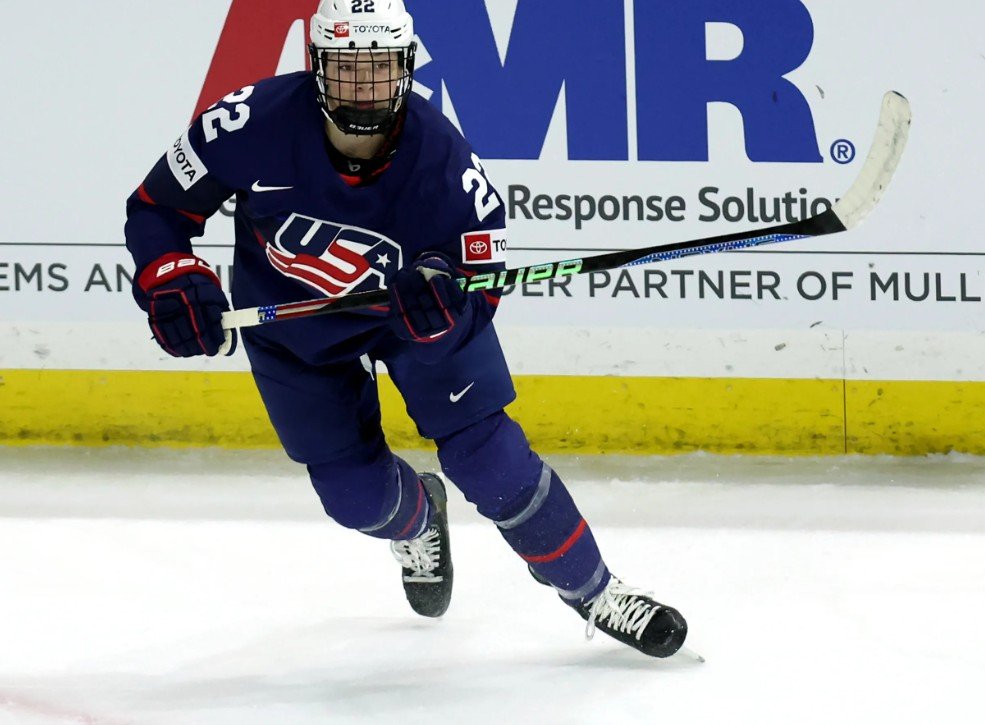
The village of Orangeville, Illinois rarely makes international headlines. This winter, that changes. Tessa Janecke, a product of small-town rinks and long drives to practice, has been named to the U.S. women’s hockey roster for the 2026 Winter Olympics in Italy.
For her hometown, and for Illinois, it’s a moment that feels unreal and deeply earned at the same time.
A small-town name on the world’s biggest stage
Orangeville sits quietly near the Wisconsin border, a place where everybody knows everybody. Now it has an Olympian.
Tessa Janecke was officially selected to represent the United States in women’s ice hockey at the 2026 Winter Games in Milan-Cortina. The announcement landed this week, setting off a wave of pride across the Stateline region.
For many back home, the news didn’t come as a shock. Janecke has been on the radar for years, piling up accolades through youth hockey, national programs, and college competition.
Still, seeing her name on the Olympic roster hits different.
It turns a local success story into an international one.
And it puts a village of just a few hundred people on the global sports map.
Years of work behind one line on a roster
Olympic selections often look simple on paper. A name. A position. A flag next to it.
The reality is anything but simple.
Janecke’s path involved early mornings, cold rinks, and seasons where progress came inch by inch. Coaches describe her as relentless, the kind of player who keeps moving even when legs are burning.
Teammates often talk about her calm under pressure.
One sentence sums up her reputation: she shows up when games tighten.
That consistency helped her earn trust within USA Hockey’s system, where competition for roster spots is fierce and unforgiving. Every shift matters. Every camp is an audition.
This time, the call went her way.
Illinois finds itself well represented in 2026
Janecke isn’t the only local athlete heading to Italy.
Illinois will have more than one reason to tune in this February, with another Stateline-area native also making an Olympic debut.
Cameron Smith, a Rockford native and Guilford High School graduate, has been named to the U.S. ski mountaineering team. The sport is appearing at the Olympics for the first time in Milan-Cortina.
Two athletes. Two very different sports.
One shared geography.
For fans in northern Illinois, it creates a rare situation where local names pop up across Olympic broadcasts. Hockey rinks and snowy mountain courses may not overlap much, but the pride certainly does.
Basically, Illinois gets a louder voice at these Games than usual.
Why women’s hockey still carries extra weight
Women’s hockey remains one of Team USA’s most watched and emotionally charged Olympic sports.
Every Olympic cycle brings renewed focus on the rivalry between the United States and Canada, a matchup that has defined the women’s game for decades. Gold medal games between the two feel less like contests and more like events.
Janecke steps into that environment knowing expectations are sky high.
The pressure isn’t subtle. It’s baked into every shift.
Yet players often say that’s part of the draw. Wearing the U.S. jersey means accepting that history and trying to add a small piece of your own.
For younger players watching from home, especially girls in towns like Orangeville, representation matters. Seeing someone who skated on similar ice, drove similar highways, and faced similar doubts can shift what feels possible.
That ripple effect is hard to measure but impossible to ignore.
Milan-Cortina brings a different Olympic backdrop
The 2026 Winter Games will unfold across northern Italy, centered around Milan and Cortina d’Ampezzo.
2026 Winter Olympics will mark a return to Europe for the Winter Games, blending modern arenas with historic alpine venues. Organizers have promised a compact footprint and strong atmosphere, especially for indoor sports like hockey.
For athletes, location shapes experience.
Travel logistics. Ice conditions. Crowd energy.
Women’s hockey games are expected to draw strong attendance, particularly as interest in the sport continues to grow globally. Italy may not be a traditional hockey nation, but Olympic crowds have a way of embracing the moment.
Janecke will skate into that spotlight carrying both national expectations and hometown pride.
What Janecke brings to Team USA
Team USA’s coaching staff values versatility, and Janecke fits that mold.
She’s known for strong two-way play, responsible positioning, and a willingness to battle along the boards. She doesn’t rely on flash. Her game is built on reads, timing, and effort.
Those traits tend to translate well in Olympic tournaments, where games are tight and mistakes get punished fast.
While final line combinations will evolve through training camp, Janecke’s selection suggests coaches see her as someone they can trust in high-leverage moments.
That trust is currency at the Olympics.
Once earned, it opens doors to bigger roles.
The moment hits home in Orangeville
Back in Orangeville, the news has spread the old-fashioned way. Conversations at local businesses. Messages passed through school networks. Social posts shared and reshared.
For a village used to quiet winters, the Olympics have added buzz.
There’s something grounding about that contrast. Global stage. Local roots.
Janecke’s story reminds people that elite athletes don’t only come from massive cities or famous prep programs. Sometimes they come from places where winter feels long and rinks feel like second homes.
Sometimes they come from Orangeville.
The road ahead is short and intense
With the Games approaching quickly, there isn’t much time to soak it all in.
Training ramps up. Expectations sharpen. Media attention grows louder.
Olympians often say the weeks before competition blur together. Preparation crowds out reflection. Only later does it fully land what they accomplished just by getting there.
For now, Janecke’s focus will narrow to the basics. Skating. Systems. Team chemistry.