
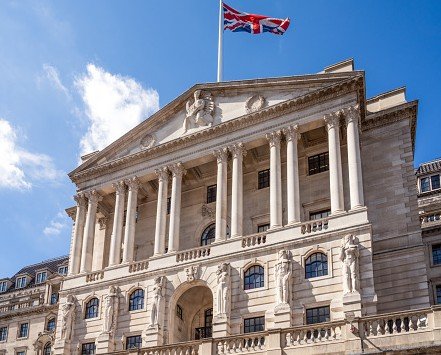
The Bank of England is preparing to soften capital rules for UK banks for the first time in a decade, a shift that signals a deepening push to spur lending across an economy still wrestling with sluggish growth.
The move comes on the back of new stress-test results showing Britain’s largest lenders can handle a harsh downturn without breaking stride—giving regulators political and economic room to rethink long-standing post-2008 safeguards.
A Rare Regulatory Shift After Years of Caution
The Bank of England’s proposal sounds simple—trim capital requirements tied to risk-weighted assets by roughly one percentage point, moving the benchmark closer to 13%. Yet the implications aren’t small. It reduces the financial padding banks must keep locked away, freeing more cash for loans to households and companies.
For lenders that have historically held capital buffers comfortably above the mandatory line, the message feels almost like a nudge: Use it.
In recent years banks have been accused of being overly cautious, hoarding capital while businesses complain credit is too tight. The Bank’s financial policy committee hinted at that frustration, saying banks “should have greater certainty and confidence” to deploy their balance sheets.
One sentence.
Another short one.
Still, loosening the controls rekindles uncomfortable memories. These rules were built after the financial crisis, the kind that turned the word “capital” into both shield and warning sign. Rolling any of that back—however marginal—naturally raises eyebrows.
Stress Tests Give Regulators Breathing Room
The timing isn’t accidental. Fresh stress-test results show Barclays, Lloyds, Nationwide, NatWest, Santander UK and Standard Chartered remain sturdy even under a scenario that looks like a financial storm: surging inflation, collapsing markets, and a steep drop in household incomes.
The Bank argues that the sector has proved its resilience through Covid, supply-chain chaos, and the shockwaves of Russia’s invasion of Ukraine. And unlike the pre-crisis era, leverage is lower, corporate lending is more scrutinized, and the capital frameworks are well understood by both regulators and banks.
A short pause. One line, just to break the rhythm.
However, it’s still impossible to ignore the other side of the debate. The very reason these institutions stayed upright during Covid was because the guardrails held. That leaves critics asking: if the scaffolding worked, why remove any of it now?
To break it down clearly, here’s the context that shapes the discussion:
-
Banks passed severe stress scenarios with significant margin.
-
Excess capital is sitting idle instead of cycling into the economy.
-
Policymakers are desperate to unlock credit as growth stalls.
-
Politicians want visible signs that the UK is “open for business.”
The Bank seems to be betting that the sector is strong enough—at least for now—to justify the adjustment.
Political Pressure Behind the Scenes
If you listen carefully to the recent remarks from the Treasury, it’s hard to miss the drumbeat. Chancellor Rachel Reeves has spent months urging regulators to make rules “support growth,” going as far as warning that overly rigid frameworks were acting like a “boot on the neck” of British businesses.
Her comments last week were more subtle, but still unmistakable. In a letter to governor Andrew Bailey, released alongside the budget, she welcomed the review and stressed the need for a capital regime that balances resilience with the UK’s competitiveness.
One sentence again. A small one.
Political momentum matters here. The government is increasingly eager to advertise a shift away from the more cautious, post-crisis regulatory culture. Ministers argue that, without a more flexible approach, the UK will struggle to attract investment, scale high-growth firms, or compete with the US and EU on innovation.
It’s a familiar argument, but the stakes feel higher now that productivity is flat and business investment has lagged for nearly a decade.
A New Debate Over Safety and Growth
Some worry this could be the first domino. If the government is already rolling back parts of the ring-fencing rules and easing capital requirements, what comes next? Will market discipline tighten naturally, or will memories fade?
A one-sentence paragraph.
Others counter that the proposal stays well within safe boundaries. Banks today operate under a fundamentally different environment than in 2007. Liquidity metrics are tougher. Risk models are more conservative. Boards face more scrutiny. And shareholders themselves demand safer balance sheets after years of volatility.
The conversation feels like a tug-of-war between two visions: one believes regulation is now too heavy; the other believes the safeguards are exactly why the system hasn’t cracked.
To add clarity, here’s a simple comparison capturing where things stand:
| Factor | Post-2019 Position | Revised Proposal |
|---|---|---|
| Sector Capital Requirement | ~14% RWA | ~13% RWA |
| Lending Incentive | Limited | Increased |
| Stress-Test Performance | Strong | Unchanged |
| Political Pressure | Low | High |
One single line to reset the pacing.
Even within the Bank, the tone is measured. Officials emphasize that the sector remains well capitalized and that adjustments are “consistent” with supporting both growth and stability. They haven’t suggested anything like a wholesale dismantling of the post-crisis regime.
But symbolism matters, and this is the first loosening of its kind in more than a decade.
What Comes Next for Banks and Borrowers
The Bank expects to finalize the new capital framework in the coming months, with the Board of Trustees preparing to weigh in. Market analysts think banks will welcome the relief, though it’s unclear how aggressively they’ll respond.
Some expect a modest uptick in mortgage availability. Others think small businesses may see improved credit terms, especially in areas where lending margins have historically been thin.
One sentence here, standing alone.
But the broader question is whether the change will move the needle on growth. For all the government’s optimism, banks are still operating in an environment with cautious consumers, choppy markets, and thin profitability on some loan products. Capital rules are just one variable in a much bigger equation.
The Bank, however, seems convinced the timing is right. Regulators framed the change as part of a broader effort to ensure “long-term capital for productive investment,” particularly for firms with potential to scale quickly.
Whether that actually leads to a wave of borrowing or becomes a footnote in the UK’s economic recovery will become clearer next year. But for the first time in years, the direction of travel in banking regulation is unmistakably shifting.