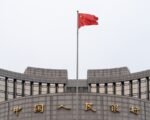
The gadgets in your pocket represent a dangerous compromise. While American tech giants preach privacy at home, experts warn they are quietly surrendering to Beijing’s demands. This deepening submission to Chinese regulations is now flashing red for U.S. national security.
Apple bowing to Beijing laws
Washington has sounded the alarm for years regarding the Chinese Communist Party and its goal to dominate global technology. A fresh wave of scrutiny is now highlighting how American companies are helping them do it. Experts point to a disturbing trend where profit margins in China are prioritized over American values and security.
The most significant concern revolves around Apple and its relationship with Chinese state entities.
Apple promotes itself as a fortress of user privacy in the United States. The reality in China looks very different. To comply with local laws, the company moved iCloud data for its Chinese users to servers run by a state linked firm called Guizhou Cloud Big Data.
This transfer included the digital keys needed to unlock that data.
This move effectively bypassed the legal protections that usually stop governments from snooping on private citizens. Beijing no longer needs to ask an American court for data access. They can use their own legal framework to demand it from the local firm.
Critics argue this creates a massive vulnerability. It exposes user data to a government known for surveillance and censorship.
“Ignorance is never an excuse. This is not speculation. It is documented behavior.”
The compromise extends beyond just data storage. Apple has frequently removed apps from its store that help users bypass internet censorship. This includes Virtual Private Networks (VPNs) that are essential for accessing the free web.

Silicon Valley investors fund the rival
The issue is not just about one company. It involves the massive flow of American capital into Chinese technology sectors. Pension funds and individual investors often unknowingly support these entanglements through their stock portfolios.
Major tech firms act as the bridge for this capital.
Google famously left the Chinese market in 2010 due to censorship concerns. However, the allure of the massive market kept drawing them back. Reports surfaced years later about “Project Dragonfly,” a secret plan to launch a censored search engine in China.
While Google shelved the project after internal outrage, the intent to compromise was clear.
This willingness to bend the knee worries national security experts. If American tech giants are ready to censor search results, what else will they concede? The concern is that these companies might inadvertently help the CCP advance its artificial intelligence and surveillance capabilities.
Here is a breakdown of the contradictory stances taken by Big Tech:
| Action in the US | Action in China |
|---|---|
| Lobbying for privacy rights | Storing encryption keys on state servers |
| promoting free speech | Removing apps that evade censorship |
| Protecting user data from government | Complying with broad national security laws |
| Advocating for open internet | Exploring censored search engines |
Data security faces new threats
The legal landscape in China makes these corporate relationships dangerous for the United States. The National Intelligence Law of 2017 requires all organizations and citizens in China to support, assist, and cooperate with state intelligence work.
This means no company operating in China can legally refuse a request from Beijing for data.
This law obliterates the corporate firewall American executives claim to have. If a U.S. tech firm has servers, staff, or research labs in China, those assets are subject to this law.
We are seeing some companies wake up to this reality.
Microsoft recently asked hundreds of its China based employees to consider relocating to other countries. This move signals a growing recognition that keeping top talent and sensitive research inside China is too risky. It suggests that the era of open collaboration is closing rapidly.
The risk is not just about stealing trade secrets anymore. It is about the weaponization of data.
China is aggressively collecting vast amounts of data to fuel its artificial intelligence models. When American companies store data locally to maintain market access, they may be feeding the very system that threatens Western dominance.
Congress takes aim at tech giants
Lawmakers in Washington are finally losing patience. The House Select Committee on the CCP has been aggressively highlighting these vulnerabilities. They are pushing for stricter rules on outbound investment and data security.
The message from Capitol Hill is that economic entanglement can no longer trump national security.
Investors are being warned to look closer at where their money is actually going. Bill Flaig, an expert on the topic, notes that American investors are complicit in this transfer of power. They are funding the rise of a technological adversary through their holdings in companies that refuse to decouple.
The separation will be painful for stock prices.
Big Tech relies heavily on the Chinese manufacturing ecosystem and consumer market. Breaking these ties will cost billions and disrupt supply chains for years. However, the alternative is a future where the United States loses its technological edge because its own champions sold it out for quarterly profits.
The days of claiming “neutrality” are over. Tech companies are now forced to choose between the American values that allowed them to grow or the authoritarian demands of their largest foreign market.