
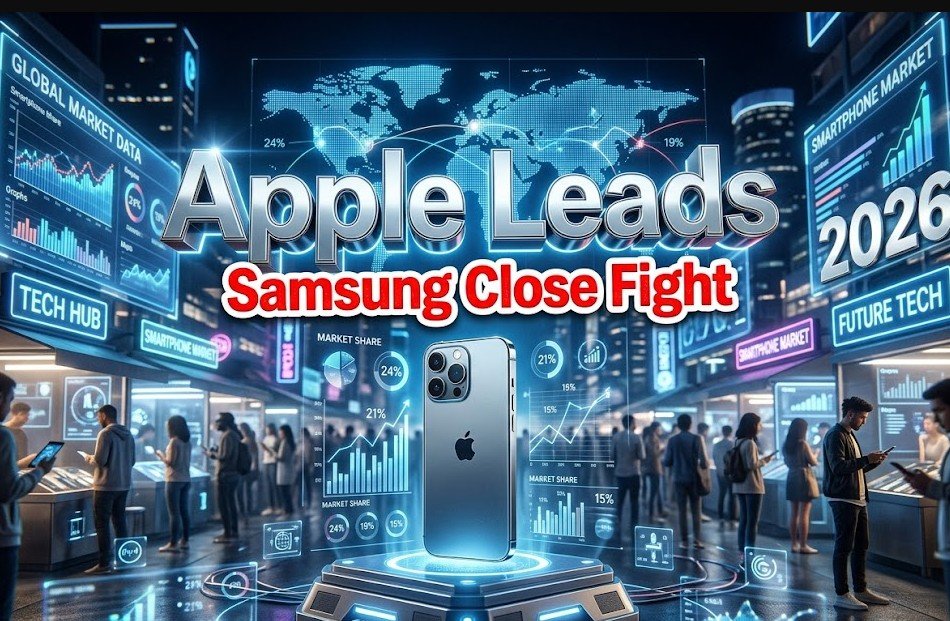
The global smartphone race has tightened in early 2026 as Apple holds the number one position with 21 percent market share, narrowly ahead of Samsung at 20 percent. The latest industry data shows shifting consumer demand, supply chain pressure, and rising memory costs reshaping the entire mobile market.
Analysts say the gap between top players is small but highly significant in a slowing industry.
Apple Strengthens Lead With iPhone 17 Demand
The dominance of Apple is driven by strong demand for the iPhone 17 series and aggressive trade in offers that encouraged upgrades across major markets.
Apple’s ecosystem loyalty continues to be a major advantage. Users are staying within the brand for services, accessories, and long term software support.
Key factors behind Apple’s leadership:
- Strong iPhone 17 global sales momentum
- High resale value supporting trade in programs
- Premium segment growth in US, China, and India
- Expanding services revenue ecosystem
Apple has managed to stay insulated from demand slowdown by focusing on high value customers instead of entry level volume.
Industry reports show Apple grew while the overall smartphone market shrank by around 6 percent due to weaker global demand and memory shortages .
Samsung Holds Second Spot but Faces Pressure
Samsung remains firmly in second place with a 20 percent share, but it recorded a 6 percent decline in shipments year over year.
The company’s performance has been affected by timing issues and weaker entry level sales in several regions.
Main challenges for Samsung include:
- Delayed rollout of the Galaxy S26 series
- Slower demand in budget smartphone segments
- Competitive pressure from Chinese brands
- Price sensitivity in emerging markets
Despite this, early sales reports suggest a strong response to the Galaxy S26 lineup, which could improve Samsung’s position in the next quarter.
Industry analysts believe Samsung’s premium and foldable phone segment remains a strong long term growth engine, even if short term shipment numbers remain under pressure.
Xiaomi and Chinese Brands Under Strain
Xiaomi continues to hold third place with 12 percent market share, but it has seen one of the sharpest declines in the top five, dropping nearly 19 percent year over year.
The main reason is rising component costs and supply chain pressure, especially in memory chips.
Other major Chinese brands are also facing similar challenges:
OPPO, including OnePlus and realme, is under sales pressure with shrinking margins
Vivo continues to struggle in price sensitive markets
A major industry shift is underway:
| Factor | Impact |
|---|---|
| Memory chip shortage | Higher production costs |
| Premium shift | Lower demand for cheap phones |
| Trade uncertainty | Slower inventory cycles |
| Refurbished market growth | Reduced new device sales |
Chinese OEMs are being hit hardest because they depend heavily on mid and low cost smartphones.
Market Slowdown Reshapes Global Strategy
The global smartphone industry is entering a slower growth phase in 2026. Instead of chasing volume, companies are now focusing on profitability and efficiency.
This shift is visible across all major brands:
- Fewer low margin models are being launched
- Product portfolios are being streamlined
- Refurbished phone markets are expanding
- Premium devices are becoming the key revenue driver
Experts say memory and storage prices remain a key risk factor for the industry. These components are becoming more expensive due to global semiconductor demand from artificial intelligence infrastructure.
This is forcing smartphone makers to rethink how they design, price, and sell devices globally.
Another major trend is the growing importance of device longevity. Consumers are now holding phones longer, sometimes more than three years, reducing overall shipment growth.
What Comes Next for the Smartphone Industry
The rest of 2026 is expected to remain highly competitive but slow in growth. Apple is likely to maintain its leadership if premium demand stays strong, while Samsung may regain momentum through its flagship cycle.
Meanwhile, Chinese brands are expected to focus more on emerging markets and affordability strategies to stabilize volume.
The biggest question now is not just who sells the most phones, but who can survive the profit squeeze in a changing global market.
As the industry evolves, one thing is clear. The smartphone race is no longer about rapid expansion. It is about survival, efficiency, and long term ecosystem strength.
The next few quarters will decide whether Apple’s lead becomes a long term shift or just another cycle in the fast moving tech world.