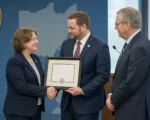
LSU Health Shreveport and Louisiana Tech signed a Memorandum of Understanding on Aug. 4 that opens collaborative projects, shared labs and cross-campus mentorship while placing the coming $150 million St. Vincent research center within reach of both faculties.
The quiet paperwork formalizes a longstanding relationship at a moment when north Louisiana is already converting old retail space into labs and landing large tech investments.
What the Agreement Delivers
Officials gathered at the Louisiana Tech Research Institute in Bossier City to sign the MOU. Students and researchers from both campuses gain access to specialized laboratories and equipment plus training from the other institution’s faculty.
The deal also encourages joint grant proposals, technology transfer and workforce programs. Senior Vice Chancellor Dr. Lester W. Johnson of LSU Health Shreveport framed the choice plainly.
We are about to invest $150 million or so over at the St. Vincent Mall in Shreveport on a world class research center for the health sciences, and we want to make it available for the great researchers that we have in northern Louisiana. Enough of these zero-sum games.
Johnson’s remark captured the tone. Louisiana Tech President Dr. Jim Henderson pointed to scale: the two campuses already do strong work in complementary fields and can now operate at a greater combined size.
Interim Vice President for Research Dr. Ramy Ramachandran called the framework a win that raises competitiveness for funding still on the horizon. Assistant Vice Chancellor for Research Oren Rom, PhD, RD, stressed that federal agencies now favor multidisciplinary teams, shared infrastructure and clear regional impact.
The $150 Million Hub Waiting Next Door
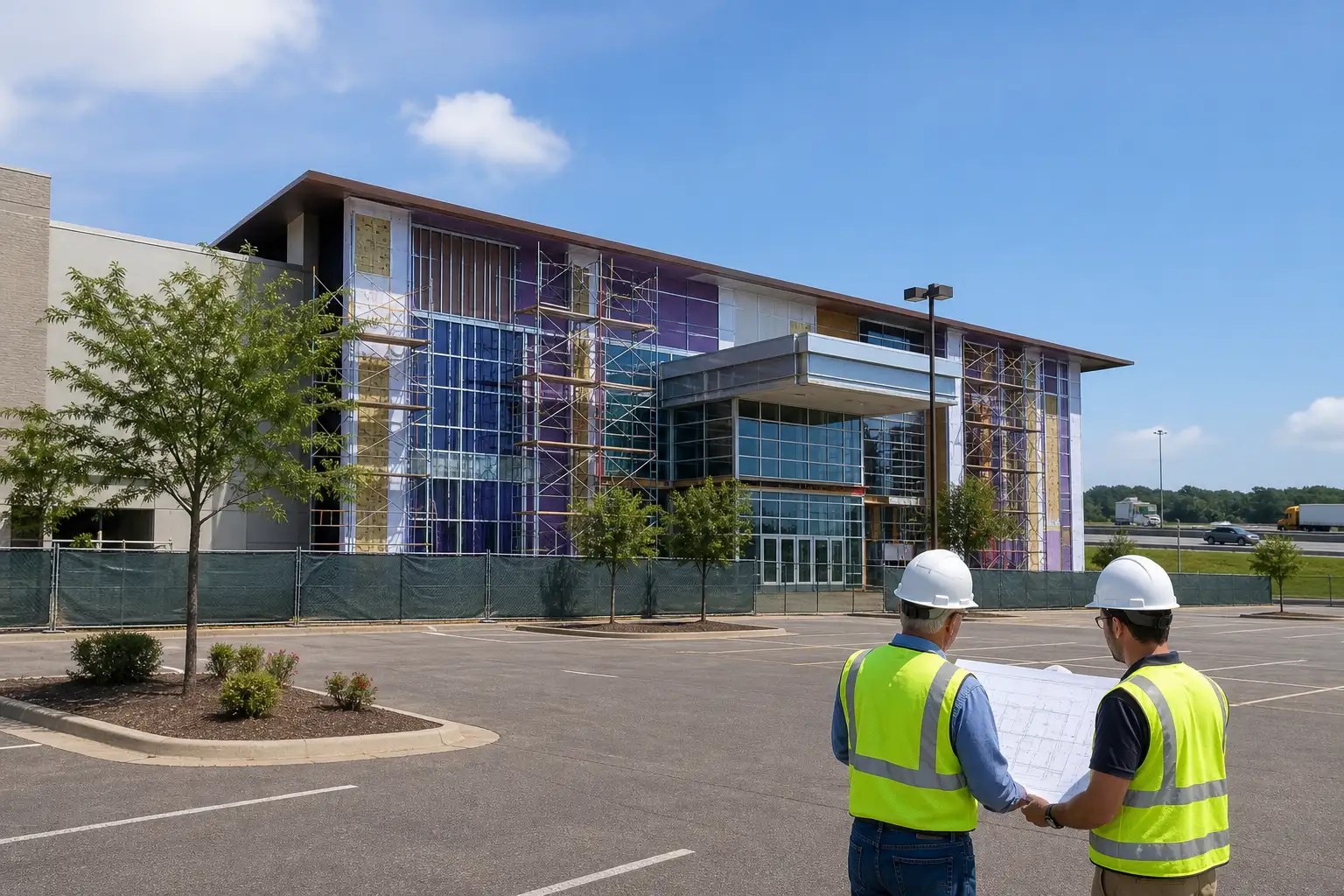
The MOU lands just as LSU Health Shreveport converts the former Sears at Mall St. Vincent into a major research complex. The project targets cancer and cardiovascular work and is designed as modern open lab space rather than a brand-new tower.
- 181,000 square feet of adaptive laboratory capacity on 18 acres with more than 800 parking spaces
- Construction start targeted for January 2027 and occupancy for September 2028
- Recruitment goal of 40 new funded researchers within five years of the 2024 launch
- System ambition to support LSU’s drive toward top-50 research status and R2 recognition for the Shreveport campus
Foundation materials describe the site as less than a mile from the main campus, visible from the I-49 corridor, and free of new parking pressure on Kings Highway. The 181,000 square feet of adaptive lab space is the physical answer to rising NIH projections and the space needs of recruited investigators.
The Cancer and Cardiovascular Research facility plans note the expansion comes thirty years after the Biomedical Research Institute opened in 1994. Officials say reuse of the Sears structure shortens the timeline compared with ground-up construction and adds foot traffic that can help stabilize the mall itself.
Where Biomedical Meets Engineering and Manufacturing
LSU Health Shreveport brings biomedical, clinical and translational depth. Louisiana Tech supplies engineering, biomedical engineering, micromanufacturing, advanced manufacturing and technology development.
That pairing is concrete rather than rhetorical. Louisiana Tech’s biomedical programs already run work in nanoscience, neural engineering, tissue engineering and drug delivery. Students gain hands-on experience that maps directly onto device and materials problems rising from clinical research.
- Shared access to specialized equipment that neither campus can fully duplicate alone
- Joint mentoring that lets graduate students and postdocs move between wet labs and engineering bays
- Faster paths from discovery to prototype through micromanufacturing and advanced manufacturing expertise
- Stronger multi-investigator proposals that federal reviewers increasingly expect
Rom noted the agreement lowers barriers so investigators can exchange knowledge and tackle problems no single discipline solves as well alone. The biomedical engineering research spanning nanoscience and related fields gives the medical side a ready technical counterpart.
A Collaboration That Already Had Roots
The new MOU is not the first formal step. In 2019 the two institutions received board approval for the Center for Tissue Engineering and Regenerative Medicine. That earlier center focused on cell-based and scaffold therapies aimed at tissue loss from metabolic disease or trauma, with explicit attention to diabetes, heart disease and cancer burdens common in the region.
The 2019 Center for Tissue Engineering approval already described a multi-disciplinary team training future scientists, engineers and clinicians. Tuesday’s agreement simply widens the aperture: more labs, more faculty pathways, and the new St. Vincent square footage as shared infrastructure.
Louisiana Tech Research Institute itself sits inside Bossier City’s innovation corridor and already links campus talent to defense and technology sponsors. The MOU folds health sciences into that same practical network.
The Regional Numbers Behind the Handshake
Foundation impact estimates for the research expansion project put hard figures on the construction phase and the longer operating horizon.
| Metric | Figure | Notes |
|---|---|---|
| Construction-phase economic activity | $288.7 million | Annual total during build |
| Construction-related jobs | 2,334 | Northern Louisiana trades, design, engineering |
| State and local tax revenue (build) | $9.2 million | During renovation |
| Ongoing annual economic impact | $78.4 million | By 2030 from salaries, supply chain, research spend |
| Ongoing jobs supported | 363 | Direct and indirect statewide by 2030 |
| Annual tax revenue (operating) | $4.7 million | State and local, direct and induced |
Those projections sit alongside other north Louisiana moves. The region has marketed a technology corridor that already mixes academia, defense and private industry. Recent announcements of multi-billion-dollar data-center investment have added another layer of high-skill demand. The research MOU and the mall conversion give health sciences a seat at the same table.
Why Federal Reviewers May Notice
Rom’s point about agency preferences is practical. Large NIH and other federal solicitations increasingly reward teams that already share infrastructure, train a joint workforce and show regional economic spillover. An MOU that codifies those elements becomes evidence rather than aspiration in the next proposal cycle.
Ramachandran added that interactions between researchers with diverse expertise raise the odds of innovations that can move into commercialization. The combination of clinical problems, engineering tools and manufacturing know-how is exactly the mix many translational programs now seek.
For students the immediate change is access. A Louisiana Tech engineer can work inside LSU Health core facilities; a biomedical graduate student can draw on Tech’s fabrication and modeling strength. Mentorship crosses the institutional line without new bureaucracy each time.
The St. Vincent project itself is structured to avoid state capital funding, relying instead on private and other sources. That design keeps the expansion on a faster private-sector-style clock while still serving public university missions.
What the Quiet Paperwork Sets in Motion
The Aug. 4 signing will not generate daily headlines. Its value shows up in the next joint R01 submission, the next shared graduate student, and the day the St. Vincent floors fill with investigators from both campuses.
North Louisiana already hosts defense-linked research nodes, a growing cyber presence and large private tech investment. Adding a formally open health-sciences research hub next to an engineering-strong partner completes a more durable stack. Johnson’s rejection of zero-sum thinking is the operational rule: the center and the MOU treat northern Louisiana talent as a single pool rather than competing ledgers.
If the recruitment target of 40 funded investigators is met and the 2028 occupancy holds, the region gains both square footage and a working model for how medical and engineering campuses can operate as one research enterprise. That model is the sleeper story inside the short signing ceremony.