
Sam Ragsdale from a16z Crypto just made a striking claim. Autonomous AI agents handling shopping could soon make traditional online advertising obsolete. This shift may rewrite the economic rules that have powered the internet since the late 1990s.
The idea comes at a pivotal moment. AI tools already help millions find products. Now they stand ready to complete purchases too. The change goes far beyond convenience. It challenges the very foundation of how the web makes money.
The Distraction Economy That Built The Web
For nearly three decades, advertising has funded the open internet. Humans browsing pages get distracted by ads. That partial attention created a massive industry. Search giant Google dominates this space. Estimates put the global online advertising market at roughly 291 billion dollars in 2025.
Sam Ragsdale traces it back to 1997. The early web lacked easy ways to charge strangers for content. Servers needed a business model. The clever hack called advertising solved it by inserting a third party. Advertisers paid for eyeballs. Users got free access. Platforms grew rich.
This model turned the internet into civilization’s town square. It created the massive datasets that trained today’s large language models. Yet Ragsdale sees beautiful irony here. The same system that built the open web now faces disruption from the AI it helped create.
Sites like Stack Overflow have seen views drop 75 percent since GPT-4 launched. Tech news traffic fell around 60 percent. Humans still click ads sometimes. AI agents do not.
Why AI Agents Ignore Ads Completely
Large language models and autonomous agents operate differently from people. They follow goals with laser focus. Distractions like banner ads or sponsored results hold no power over them.
This matters because shopping patterns are changing fast. Instead of users navigating stores through search or social feeds, agents will handle research, comparison, and buying. They evaluate options based on user preferences, price, reviews, and needs.
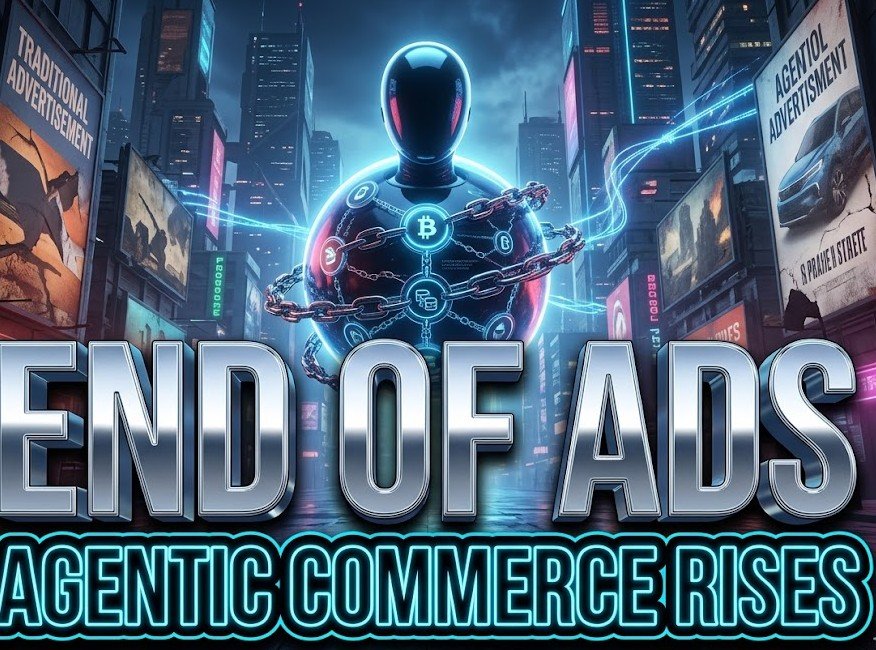
Ragsdale explains the core problem. “Humans reading a webpage can be distracted by an advert, monetizing their partial attention. But LLMs and agents do not get distracted.”
The result could reshape entire industries. Publishers and platforms that rely heavily on ad revenue face pressure to adapt. Merchants might reach buyers more directly. Conversion rates could rise without the noise of competing ads.
Early signs appear in tools like ChatGPT and Gemini. These platforms added features allowing purchases inside conversations. Users buy without leaving the chat. This marks the first step toward agent-driven commerce.
Walled Gardens Offer Just A Preview
Current AI checkout features work well for users. Consumers discover better products. Merchants see improved conversions. Platforms take a cut, often between 5 and 10 percent.
Yet Ragsdale calls these developments walled gardens. Merchants must go through approval processes. Platforms curate lists of approved sellers. Integration takes time and resources.
He compares it to AOL in the 1990s. That service offered a curated internet experience. Users stayed inside the garden. Open protocols like HTTP eventually won by removing gatekeepers. Anyone could publish and reach audiences.
An agent limited to pre-approved merchants acts like an employee with a corporate card restricted to three vendors. True power comes when agents operate freely across the entire web.
Recent developments show both paths advancing. OpenAI launched Instant Checkout in 2025 with partners like Etsy and Shopify. Some reports note scaling adjustments as brands test the waters. Meanwhile, major players push for more open systems.
Open Protocols Power The Real Shift
The future lies in open standards that let agents discover and pay for anything. Two key protocols stand out right now.
Coinbase developed x402. It revives the old HTTP 402 Payment Required status code from 1997. Agents request resources. Servers respond with payment demands. Agents pay instantly using stablecoins or other methods and gain access. Transactions settle fast with tiny fees.
Stripe and Tempo recently launched the Machine Payments Protocol, or MPP. Announced around March 18, 2026, it supports both crypto and fiat payments. Visa, OpenAI, Anthropic, and others have shown interest. The protocol works across different rails and blockchains.
These systems solve the old micropayment problem. Credit cards charge fixed fees that kill small transactions. Stablecoins on modern networks cost fractions of a cent.
Merchants register on discovery tools like x402scan or similar directories. Agents find them without complex partnerships. The process stays permissionless.
Ragsdale highlights agent capabilities that make this exciting. Advanced models read API schemas and call unfamiliar services correctly. They compose complex tasks on the fly.
Imagine a supply chain agent. It detects a 15 percent price hike from tariffs. It finds local alternatives, requests samples, negotiates terms, and switches suppliers. No procurement teams or RFPs needed.
Discovery gets solved too. Tools like AgentCash give agents a single balance to pay across services. Merchants gain instant exposure to thousands of active agents.
Here are the main advantages of open agentic commerce:
- Agents find optimal products across all merchants, not just approved lists
- Merchants avoid lengthy approval processes and platform fees
- Transactions happen directly with low costs
- Innovation comes from anywhere, not just big platforms
- Users get truly personalized, efficient shopping
What This Means For The Future Of The Internet
This transition carries huge implications. Consumers could enjoy lower prices and better matches as agents negotiate and compare relentlessly. Small merchants gain equal footing with big brands through open discovery.
The ad industry will need to evolve. Some predict a move toward agent-friendly formats or entirely new models. Media companies might focus more on direct value and subscriptions.
Challenges remain. Trust and verification matter when agents spend money. Recent work pairs protocols like x402 with identity systems from World to prove human backing behind agents while protecting privacy.
Security, regulation, and smooth integration across the web will take time. Yet the direction feels clear. Open protocols echo the early internet’s success. They remove barriers and let creativity flourish at the edges.
Ragsdale puts it powerfully. In 1997, open protocols and advertising solved the web’s business model problem. In 2026, that hack is dying. Open protocols and a 28-year-old status code stand ready to replace it.
The internet could become more efficient and accessible than ever. AI agents might handle routine purchases while humans focus on what matters most. Commerce could flow more naturally, like conversation.
This moment echoes past technological leaps. Each one replaced old systems with something more powerful. The winners were those who embraced openness and built for the new reality.
What happens next depends on how quickly developers, merchants, and platforms adopt these open standards. The tools exist today. The agents are getting smarter by the week.
The web that emerges could look very different. Less cluttered with distractions. More focused on real value and direct connections. More opportunity for anyone with a good idea and a server.
The economic contract that defined the internet for a generation stands at a turning point. Agentic AI commerce may not just change how we shop. It could reshape how the entire digital world operates.