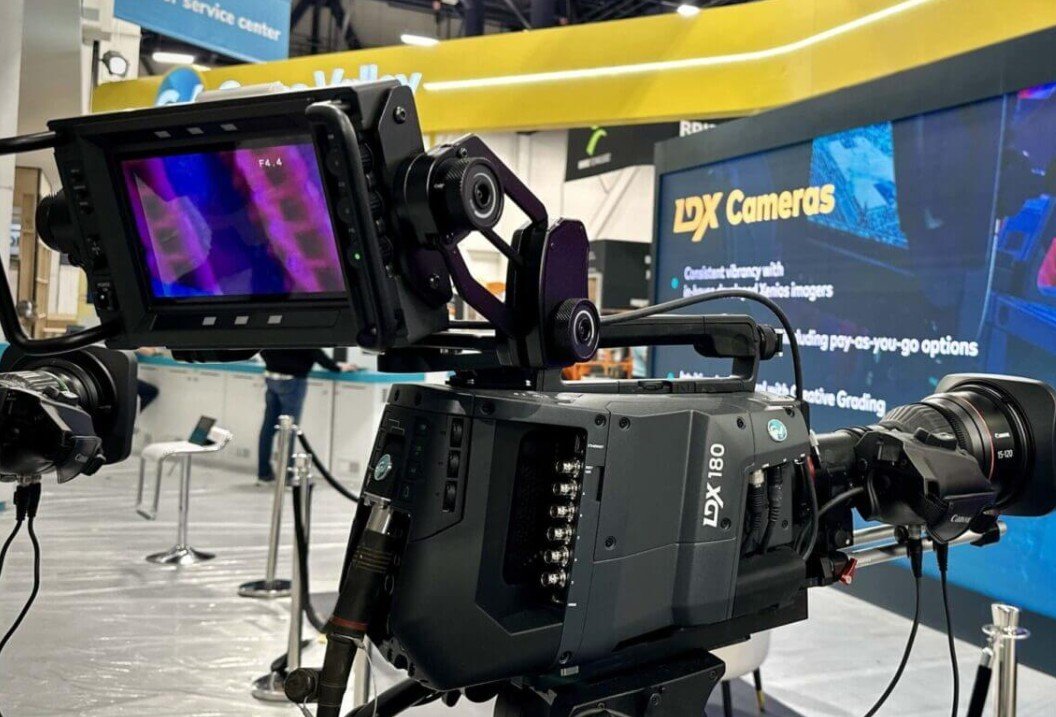
The 2025 NAB Show in Las Vegas is turning heads as broadcast technology giants reveal their latest innovations. Grass Valley is set to showcase its compact LDX C180 camera, a game changer designed for Steadicam and PTZ applications that signals a major shift in how broadcasters approach live production.
IP Technology Takes Center Stage at Las Vegas
The broadcast industry is witnessing a quiet revolution. While conversations often focus on resolution jumps from HD to UHD or the move to high dynamic range, the real transformation happening behind the scenes involves IP based workflows.
Broadcasters are finally waking up to ST2110 and its potential to reshape live production.
Post consultant Gary Adcock has been tracking this shift closely. He pointed out that productions using LED walls and virtual environments are embracing IP workflows at an accelerating pace.
“With 2110 we start not being bound by frame rates,” Adcock explained. “You come out of a video card, you’re bound by DisplayPort, but when you do 2110 you’re not.”
This freedom from traditional limitations opens doors for creative possibilities that were once impossible in broadcast settings.
Grass Valley LDX C180 Targets Mobile Productions
The LDX C180 represents Grass Valley’s answer to a growing demand for smaller, lighter broadcast cameras without sacrificing image quality. Built as a compact version of the flagship LDX 180, this camera targets specific production needs.
Key features of the LDX C180 include:
- Lightweight design optimized for Steadicam operators
- Full PTZ integration for remote production setups
- Native IP connectivity supporting ST2110 standards
- High dynamic range capture capabilities
- Flexible mounting options for diverse shooting scenarios
Steadicam operators have long struggled with bulky broadcast cameras that limit mobility and cause fatigue during extended shoots. The LDX C180 addresses these pain points directly.
PTZ applications have also exploded in recent years. Sports venues, houses of worship, and corporate studios are deploying more remote controlled cameras than ever before. Having a compact camera that delivers broadcast quality images while fitting into PTZ housings gives production teams new creative options.
ST2110 Standard Changes the Game for Broadcasters
The SMPTE ST2110 standard is not new technology. It has existed for years. But adoption has been slow as broadcasters weighed the costs of transitioning from traditional SDI infrastructure.
That hesitation is fading fast.
ST2110 allows video, audio, and metadata to travel as separate streams over standard IP networks. This separation provides flexibility that bundled formats simply cannot match.
| Traditional SDI | ST2110 IP Workflow |
|---|---|
| Fixed frame rates | Frame rate flexibility |
| Dedicated cabling | Standard network infrastructure |
| Limited scalability | Virtually unlimited expansion |
| Hardware dependent routing | Software defined switching |
| Point to point connections | Multicast distribution |
Productions using LED walls for virtual sets benefit enormously from this flexibility. Matching camera frame rates to LED refresh rates becomes simpler when you are not locked into rigid signal paths.
The financial argument is also becoming clearer. Building IP infrastructure costs less over time than maintaining separate systems for video routing, audio distribution, and control data.
Virtual Production Drives Demand for New Solutions
LED wall productions have moved from experimental to essential in just a few years. Major studios and independent productions alike are investing in these technologies to create immersive environments without expensive location shoots.
These virtual production workflows demand cameras and infrastructure that can keep pace with real time rendering engines.
Grass Valley recognizes this shift. The LDX C180 fits naturally into virtual production environments where weight savings matter and IP connectivity is expected.
Real time game engines powering LED walls operate at variable frame rates depending on scene complexity. Traditional broadcast cameras locked to specific frame rates create visible artifacts when these systems fall out of sync. IP workflows built on ST2110 offer pathways around these challenges.
The convergence of broadcast production and visual effects technology is accelerating. Camera manufacturers who ignore this trend risk losing ground to competitors who embrace it.
NAB Show 2025 Reflects Industry Transformation
This year’s NAB Show comes at a pivotal moment for the broadcast industry. Attendance numbers are strong as professionals seek hands on experience with technologies they have only read about.
The Las Vegas Convention Center provides the backdrop for announcements that will shape production workflows for years to come. Beyond Grass Valley, dozens of manufacturers are demonstrating IP based solutions across the show floor.
Cloud based production tools are appearing alongside traditional hardware. Software defined video switching platforms promise to replace entire equipment racks with applications running on standard servers.
Artificial intelligence is also making its presence felt. Automated camera control, real time graphics generation, and intelligent media management tools are drawing crowds at multiple booths.
The message from NAB Show 2025 is clear. Broadcast technology is becoming more flexible, more connected, and more creative than ever before.
Professionals attending the show are not just looking at new gear. They are evaluating entirely new ways of working that could transform their operations within the next few years.
As Grass Valley and its competitors push forward with compact, IP native cameras like the LDX C180, the boundaries between traditional broadcast and cinematic production continue to blur. The tools that once separated these worlds are converging into unified systems that serve both equally well.
What do you think about the shift toward IP based broadcast workflows? Share your thoughts in the comments below and let us know how these changes are affecting your productions.