
A major shift is underway in the solar industry as First Solar has reached a groundbreaking patent licensing deal with Oxford PV, giving the largest U.S. solar manufacturer access to critical perovskite solar technology. This agreement could accelerate the adoption of next‑generation solar panels that are lighter, more efficient, and easier to produce at scale. Inside this article we explore what this deal means for clean energy, how it boosts U.S. manufacturing, and why industry leaders are watching closely.
Why This Patent Deal Is a Game Changer for Solar
First Solar’s new agreement with Oxford Photovoltaics Limited, a spin‑off from the University of Oxford, opens the door for the American company to use Oxford PV’s current and pending patents on perovskite solar technology. The licensing deal is non‑exclusive, meaning First Solar is free to develop and manufacture perovskite‑based photovoltaic devices for markets across the United States, including utility, commercial, industrial and residential solar projects.
This deal is rare and important because perovskites are seen as one of the most promising paths to solar cells that deliver higher performance than traditional silicon modules. Perovskite materials can absorb light more efficiently, offer potential cost savings in manufacturing, and may unlock new solar markets once stability and durability challenges are solved.
Mark Widmar, CEO of First Solar, said the agreement allows the company to pursue viable pathways to commercializing thin‑film perovskite products that could serve every segment of the market while supporting its broader mission of global solar growth.
How It Advances U.S. Solar Manufacturing and Jobs
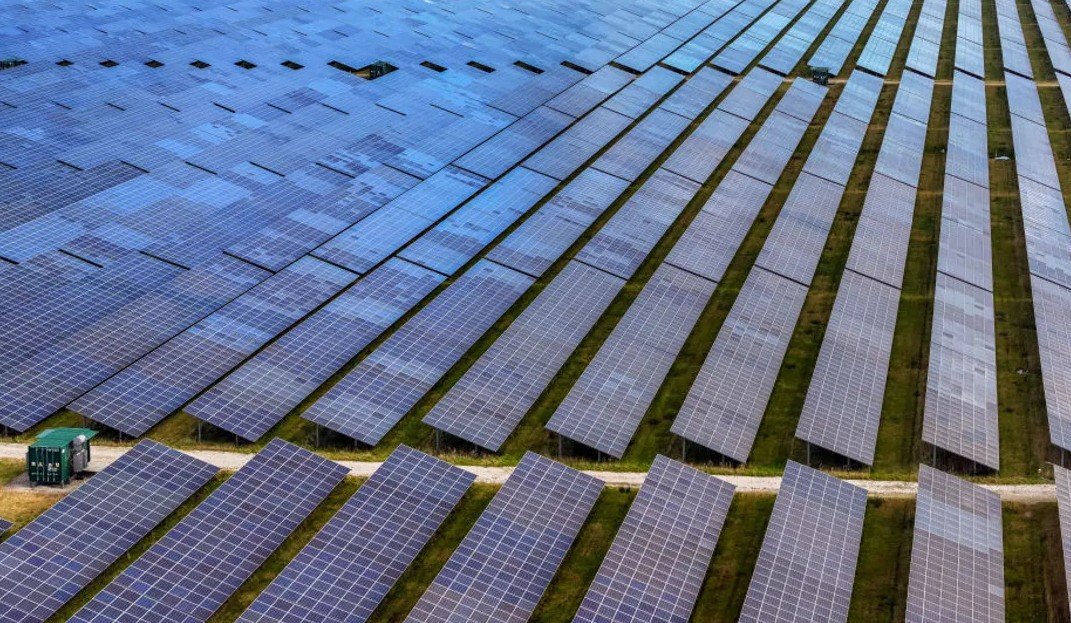
This patent agreement strengthens First Solar’s strategic focus on domestic production and innovation. The company already operates five manufacturing facilities in Alabama, Louisiana and Ohio, with a sixth plant under construction in South Carolina that is expected to start operating later this year. When that facility begins production, First Solar’s total annual manufacturing capacity in the U.S. could exceed 18 gigawatts by 2027.
First Solar has already invested more than $2 billion in thin‑film research and development, including building an in‑house perovskite development line at its Perrysburg, Ohio campus. That line produces small modules featuring perovskite semiconductors and has helped the company reach early benchmarks in efficiency and stability tests.
Industry experts say this infusion of perovskite technology into a major U.S. manufacturer could have a ripple effect across the broader solar supply chain. If successful, it may help reduce dependence on traditional crystalline silicon panels and strengthen American clean energy competitiveness globally.
U.S. Solar Manufacturing Footprint
-
Five operational plants producing advanced photovoltaic modules.
-
Sixth plant under construction in South Carolina, expected to start in the second half of 2026.
-
Annual production goal of roughly 18 gigawatts by 2027.
What Perovskite Technology Brings to the Table
Perovskite solar cells use a different semiconductor material than traditional silicon. Researchers and industry players like Oxford PV believe this technology can deliver higher efficiency and lower production costs, which could reshape how solar energy is deployed.
Globally, the perovskite solar cell market was valued at nearly $2 billion in 2025 and is projected to grow to over $24 billion by 2035, reflecting strong commercial interest and R&D momentum.
Oxford PV itself has already demonstrated commercial‑ready tandem panels — combining perovskite with silicon — that have reached efficiency levels above traditional solar modules. These tandem cells can generate more power from the same sunlight, making them attractive for installations where space and performance matter.
Experts say that overcoming two key hurdles — long‑term stability and large‑scale manufacturing — is crucial for perovskite technology to reach its full potential. Some lab tests have shown promising early results, but broader commercial deployment still requires more engineering and supply chain solutions.
Challenges and Market Context Ahead
Despite the optimistic outlook, the solar sector faces real challenges. In its latest earnings call, First Solar shared guidance for 2026 that was lower than some analysts expected, leading to a drop in its stock price. Company leadership noted headwinds like global tariffs, logistics costs and the strategic pacing of international facility utilization.
At the same time, First Solar is actively defending its existing intellectual property through legal channels. During the same period that it announced the Oxford PV licensing deal, the company filed a complaint with the U.S. International Trade Commission alleging patent infringement related to other technologies, illustrating how innovation and competitive pressure are shaping the market.
Investors also watch how First Solar balances its legacy thin‑film technology with new perovskite investments. Thin‑film solar has been competitive in large‑scale installations due to its low cost and good performance in heat, while perovskite promises efficiency gains that could narrow the gap with crystalline silicon panels.
What This Means for Clean Power and Energy Users
For utility companies and energy planners, perovskite‑enhanced solar panels could mean more electricity generation from the same surface area, reducing costs and land use over time. Homeowners and commercial users might benefit from improved panel performance and falling system prices as perovskite technology matures.
The First Solar and Oxford PV deal may also spark further partnerships across the industry, encouraging more companies to invest in advanced solar materials and manufacturing techniques. If the technology reaches scale, it could help accelerate the global transition toward renewable energy and support decarbonization goals.