
World No. 1 Aryna Sabalenka has joined a growing debate over transgender inclusion in women’s professional sports, arguing that female athletes should not be required to compete against individuals she described as “biological men.” Her comments, made during an interview with broadcaster Piers Morgan, have drawn global attention and reopened conversations around performance, fairness, policy, and competitive equity.
The WTA currently allows transgender women to participate in sanctioned tournaments under strict eligibility rules. But Sabalenka believes existing requirements do not fully address questions of athletic advantage.
Sabalenka: Fairness Must Be Protected for Female Players
Sabalenka made her remarks while promoting her December 28 exhibition event with men’s tennis player Nick Kyrgios, a “battle of the sexes” performance match. During the interview, she emphasized that she has no personal animosity and respects gender identity decisions. However, she said that from a competitive standpoint, biological differences remain difficult to equalize.
Two short sentences. She kept her tone calm.
Sabalenka said she believes elite sport is built on limits, sacrifice, and physical ceilings reached through years of training. Asking a female player to face a transgender woman who transitioned after male puberty, she argued, creates a scenario where strength and endurance advantages may persist even after testosterone suppression.
One sentence alone: She called that situation “not fair.”
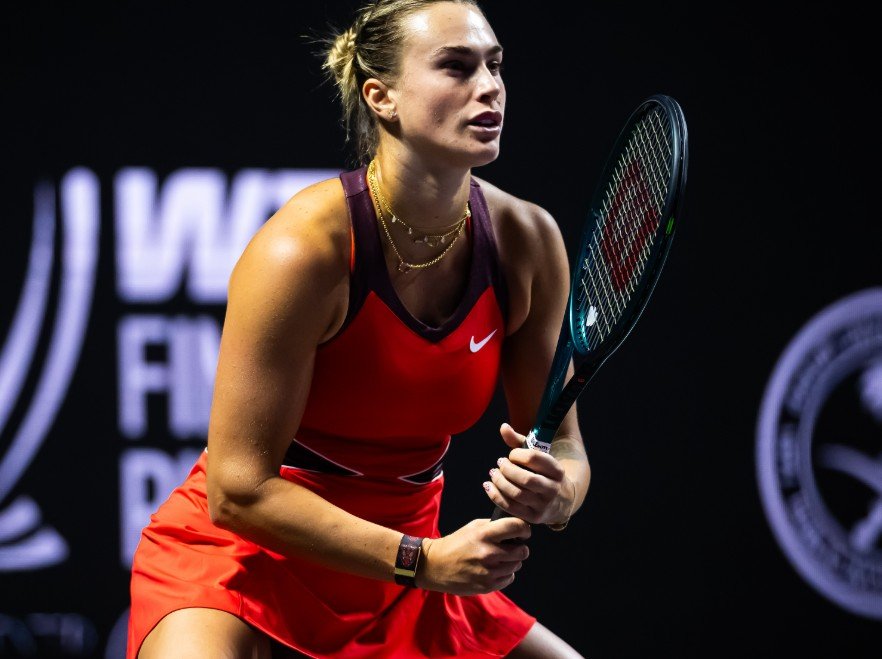
Her language reflects what many players across multiple sports have quietly expressed during locker-room conversations but have not voiced publicly. Athletes worry that speaking candidly may invite backlash or accusations of discrimination. Sabalenka’s celebrity status makes her comments harder to ignore.
-
She said that a woman competing at the highest level should not spend her career preparing only to face someone with greater retained physiological strength.
The bullet point clarifies her position without editorializing.
The WTA has not publicly responded to Sabalenka’s interview. Many trainers and sports scientists acknowledge that debates remain unresolved, with research still developing. Currently, the WTA applies testosterone limits and requires gender declaration for at least four years before allowing transgender participation.
A short one-sentence paragraph: The rules were intended as a compromise.
Current WTA Policy and How It Works
Under existing rules, transgender women can compete if they declare their gender identity as female, maintain testosterone below approved thresholds, and undergo medical evaluations. These regulations may be altered on a case-by-case basis by the WTA Medical Manager, allowing further discretion.
One sentence: Critics say discretion can be both useful and confusing.
Supporters of inclusion argue that hormone suppression significantly reduces performance advantages, and that professional sport has historically welcomed athletes with a range of biological variance. They believe the eligibility pathway is already rigorous and that sport is about opportunity as much as competition.
Opponents insist that muscle density, height, reach, and lung capacity may not reduce in proportion to testosterone change. Sabalenka’s view aligns with that camp: she believes that even after hormonal adjustments, biological imprinting can remain.
A simple reference table helps explain the difference in policy versus perceived competitive concern:
| Element | Current WTA Rule | Sabalenka’s Concern |
|---|---|---|
| Testosterone levels | Reduction required | Does not erase full advantage |
| Gender declaration | Minimum four years | Does not affect physical imprint |
| Case-by-case discretion | Allowed | Inconsistent clarity |
| Fairness in match play | Based on compliance | Based on retained physiology |
This table shows why policy and fairness do not always align in the minds of athletes.
One-sentence paragraph: Sabalenka wants clearer competitive principles, not just medical thresholds.
Why Athletes Are Speaking More Openly
Professional athletes rarely speak publicly about transgender inclusion due to reputational risk, sponsorship concerns, and fear of misinterpretation. Sabalenka’s willingness to comment suggests a shift in comfort around discussing performance integrity. Many players quietly believe governing bodies should protect competitive balance without forcing female athletes to negotiate sensitive political or moral language.
One sentence: The pressure is emotional as well as physical.
Elite sport requires strict categorization to maintain fairness. Weight classes, age brackets, disability classifications, and sex-based divisions exist for that reason. Sabalenka says women who spend their life training should not lose rankings or prize money against someone with superior physiological baseline attributes.
Another small paragraph: She argues it affects careers and confidence.
Athletes have called for more research, more transparency, and better dialogue rather than polarized debate. Sabalenka’s interview makes the conversation public in ways that governing bodies can no longer quietly postpone.
A Debate That Extends Beyond Tennis
The transgender participation issue is playing out in swimming, cycling, rugby, college athletics, and Olympic governance. Scientific bodies and federations disagree on methodology, data sufficiency, and ethical responsibility. Some sports have already introduced stricter bans or category restructuring. Others maintain inclusive policies and warn that restriction could limit civil rights.
One sentence alone: No universal rulebook exists.
Tennis is uniquely complex because strength and mobility matter differently across surfaces, match duration, and ranking tiers. Even slight performance differences can translate into competitive dominance over long tournaments.
Some federations want additional subcategories for transgender participation. Others oppose new divisions, citing inclusion rights and logistical constraints. Many observers say this is not merely a scientific debate — it is a values debate.
A one-sentence paragraph: Every side demands fairness, but fairness means different things depending on perspective.
What Comes Next for the WTA
The WTA faces pressure from athletes who want clearer rules, from advocacy groups who want open participation, and from sponsors who want stability. Governing bodies must balance biology, identity, ethics, and television economics.
One sentence: Tennis thrives on credibility.
The WTA also operates globally, meaning cultural, legal, and political expectations differ across countries. What constitutes acceptable inclusion in one jurisdiction may be controversial in another. This complicates consistency and fairness enforcement.
Here is the essential dilemma: women’s sport was built to protect performance equity and athletic opportunity. If rules evolve, they must retain those founding principles while respecting identity rights where possible. Many argue that a case-by-case model may not hold forever.
Short paragraph: The more elite the level, the harder the trade-offs.
Sabalenka’s comments will likely accelerate internal review rather than move policy overnight. Governing bodies rarely change rules instantly — but public pressure from top-ranked competitors cannot be ignored indefinitely.
Female athletes will want clarity before the issue reaches grand slams or prize-money swings. The WTA’s silence suggests deliberation, not indifference.