
Scientists have just unveiled a groundbreaking invention that tackles two of the world’s biggest environmental problems at the same time. Researchers from Incheon National University in South Korea successfully developed a high-tech sensor that detects dangerous air pollution and then harmlessly dissolves when thrown away. This innovation promises to save human lives from toxic gases while preventing millions of tons of electronic gadgets from clogging up our oceans and landfills.
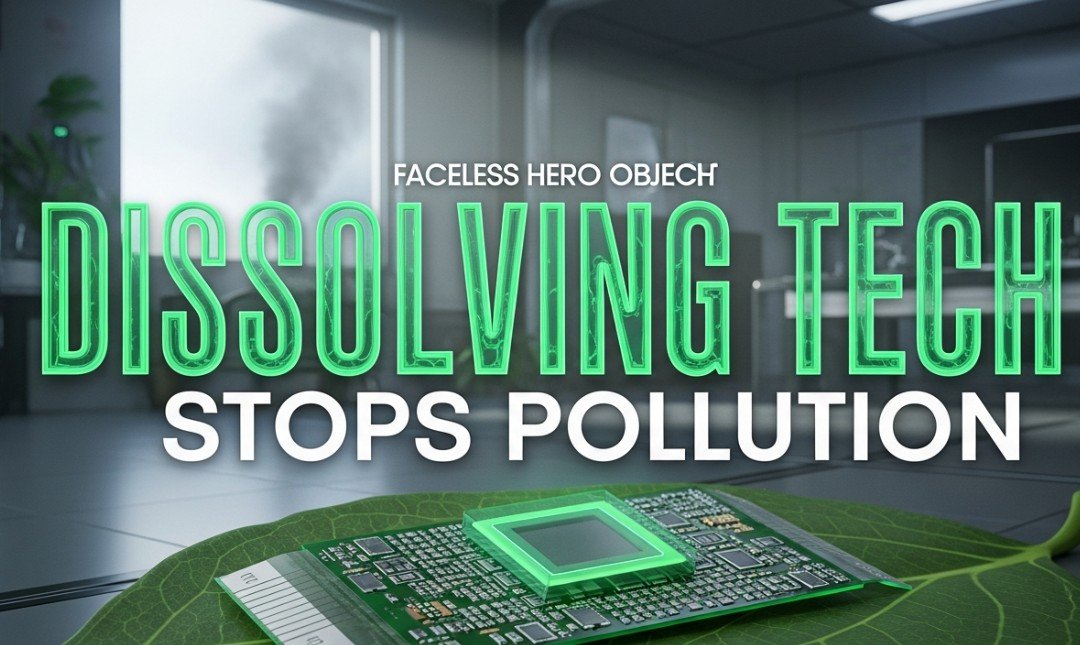
The team created these eco-friendly devices using a special type of technology called Organic Field-Effect Transistors. They are lightweight, flexible, and powerful enough to sniff out nitrogen dioxide. This gas is a silent killer produced by burning fossil fuels in cars and factories. What makes this discovery truly headline-worthy is its ability to decompose naturally. It offers a glimpse into a future where our electronics do not outlive us in the form of toxic waste.
How the new eco friendly sensor technology works
The core of this new technology lies in a clever combination of materials. Standard electronics rely on silicon and plastics that take hundreds of years to break down. The researchers at Incheon National University took a different approach. They combined two specific polymers to create the sensing layer of the device.
The first material is P3HT. This is an organic semiconductor that acts like the brain of the sensor and allows electricity to flow through it. The second material is PBS. This is a biodegradable polymer often used in compostable packaging. The challenge was making these two very different materials work together without losing performance.
Key Components of the New Sensor:
- P3HT: A polymer that conducts electricity and detects gas.
- PBS: A biodegradable substance that provides structure.
- Chloroform & Dichlorobenzene: Solvents used to blend the materials perfectly.
- Silicon Wafer: The base surface used for fabrication.
To get the mixture right, the team used a specific blending method. They dissolved the polymers in chloroform and then introduced dichlorobenzene. This chemical process is crucial. It allows the materials to separate into tiny, organized phases that maximize the surface area. A rougher surface area means the sensor has more contact points to catch gas molecules from the air. This clever engineering makes the sensor highly sensitive to nitrogen dioxide even though it is made largely of biodegradable parts.
Why we need better solutions for toxic air and waste
The urgency behind this invention cannot be overstated. The world is currently fighting a two-front war against pollution. First, there is the issue of air quality. Nitrogen dioxide is a major byproduct of combustion engines and industrial plants. Exposure to this gas is linked to severe respiratory diseases.
Common health issues caused by Nitrogen Dioxide include:
- Chronic asthma attacks in children and adults.
- Bronchitis and reduced lung function.
- Increased susceptibility to respiratory infections.
- Inflammation of the airways.
On the other front is the massive crisis of electronic waste. We live in a digital age where gadgets are often discarded after short periods of use. Traditional sensors used for environmental monitoring add to this pile of trash. They contain heavy metals and non-degradable plastics that leach into the soil and water.
Professor Yeong Don Park, who led the research team, emphasized the dual benefit of their work. He noted that these eco-friendly sensors combine sustainability with high performance. This helps reduce electronic waste significantly. He specifically pointed out the importance of protecting natural environments like oceans where microplastics are destroying ecosystems.
Testing the limits of these green devices
Creating a green sensor is one thing, but ensuring it works in the real world is another. The researchers put their new device through rigorous testing to prove its worth. A major hurdle in the past was that adding biodegradable materials usually made electronic sensors weak or slow. This new study proves that compromise is no longer necessary.
The team found that the sensors made with their specific solvent mixture were incredibly uniform. The addition of the PBS material did not block the electrical signals. Instead, the specialized coating process improved the electrical performance.
The sensors showed a strong reaction when exposed to nitrogen dioxide gas. They could detect the pollutant quickly and accurately. This level of sensitivity is vital for wearable technology. Imagine a smartwatch or a badge clipped to your shirt that warns you when the air quality drops to dangerous levels. That is the practical application this research is driving toward.
What this means for the future of our planet
This development marks a significant shift in how we think about electronics. For decades, the focus was only on making devices faster and smaller. Now, the focus is shifting toward the entire lifecycle of the product. The term “Green Electronics” is becoming a standard requirement rather than just a buzzword.
The potential applications for this technology are vast.
- Smart Cities: Governments can place thousands of these cheap, degradable sensors on streetlights to monitor traffic pollution without worrying about retrieval and disposal.
- Personal Health: Individuals with respiratory issues can carry portable monitors that do not harm the planet when they are replaced.
- Industrial Safety: Factories can monitor leakages of hazardous gases using disposable patches that decompose naturally.
The manufacturing process developed by the Incheon team is also cost-effective. The use of OFETs means these sensors can be printed on flexible surfaces. This opens the door for mass production. We could soon see a world where environmental monitoring is ubiquitous, cheap, and completely waste-free. This research proves that we do not have to choose between technological advancement and environmental preservation. We can effectively have both.
This breakthrough from Incheon National University gives us hope. It serves as a reminder that science can fix the problems it helped create. As these biodegradable sensors move from the lab to the market, they will play a pivotal role in cleaning up our air and our oceans. It is a small chip with a massive impact on the health of our planet and our future generations.
If you care about the air you breathe and the state of our oceans, this news is a breath of fresh air. It is time for big tech companies to adopt these materials and stop the flow of toxic e-waste.