
The battle for artificial intelligence supremacy is no longer just about code. It is about chips, trade deals, and geopolitical leverage. The Trump administration is using America’s dominance in semiconductor technology as a powerful diplomatic weapon.
Why AI Chips Matter More Than Algorithms
Every major AI breakthrough depends on one thing: computational power. Without advanced chips, even the most brilliant algorithms remain useless.
Tech giants like OpenAI, Google, Anthropic, and Meta pour billions into developing new AI models. But these models need specialized hardware to function. Nvidia currently controls roughly 80% of the global AI chip market.
Taiwan manufactures over 90% of the world’s most advanced semiconductors. This small island nation has become the most strategically important piece of real estate on Earth.
The relationship works like this:
- Nvidia designs the chips
- Taiwan Semiconductor Manufacturing Company (TSMC) builds them
- The US controls who gets access to them
This supply chain gives Washington enormous leverage over global AI development.
How Washington Uses Chips as Diplomatic Currency
The Trump administration has turned semiconductor exports into a foreign policy tool. Access to cutting edge AI chips is now a political decision, not just a commercial transaction.
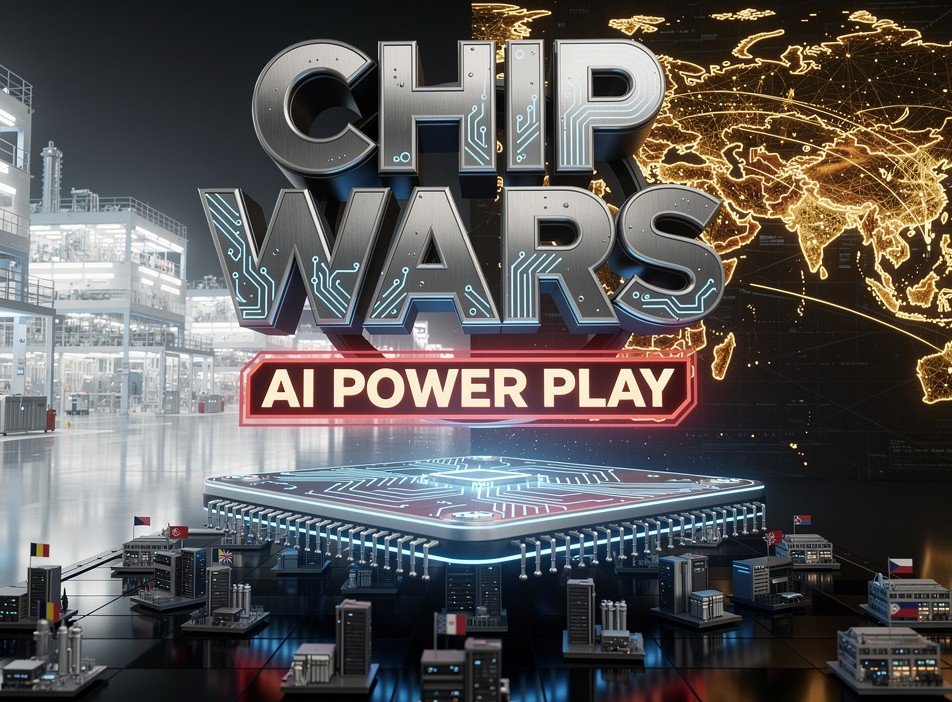
Countries seeking advanced American chip technology must demonstrate what officials call “institutional trust.” This means aligning with US interests on trade, security, and technology sharing.
Recent export controls target China specifically. Washington has restricted sales of Nvidia’s most powerful chips to Chinese companies. The ban covers H100 and A100 processors that power advanced AI training.
The goal is clear: slow down China’s AI progress while accelerating America’s lead.
Saudi Arabia, the United Arab Emirates, and other Gulf nations have recently signed AI partnership deals with US companies. These agreements came with conditions about data security and technology transfer limits.
The China Factor Driving US Strategy
Beijing views AI dominance as essential to its future economic and military power. Chinese tech giants Baidu, Alibaba, and Huawei are racing to develop competitive AI systems despite chip restrictions.
China has responded by investing heavily in domestic semiconductor production. The country allocated over $140 billion to its chip industry in recent years. But experts say Chinese manufacturers remain roughly five years behind TSMC in cutting edge production.
| Country | AI Chip Capability | Current Status |
|---|---|---|
| United States | Design leadership | Controls export rules |
| Taiwan | Manufacturing dominance | Makes 90% of advanced chips |
| China | Rapidly developing | Faces export restrictions |
| South Korea | Strong in memory chips | Samsung expanding AI focus |
This technology gap gives the US a window of opportunity. The Trump administration aims to widen that gap through continued export controls and investment in domestic production.
Taiwan Becomes Ground Zero for Tech Cold War
The island’s strategic importance cannot be overstated. TSMC’s fabrication plants represent decades of specialized expertise that cannot be easily replicated.
A Chinese takeover of Taiwan would give Beijing control over the world’s most critical technology infrastructure. This reality shapes every US decision about the region.
The Trump administration has pushed TSMC to build new factories in Arizona. The company committed $65 billion to American manufacturing facilities. Production at the Phoenix plant began in early 2025.
But moving chip production is not simple. TSMC’s most advanced processes still happen in Taiwan. The Arizona facilities produce slightly older chip designs.
Industry analysts point out a harsh truth: the world cannot quickly replace Taiwan’s manufacturing capabilities. This vulnerability keeps US policymakers awake at night.
What This Means for Global AI Development
The chip wars are reshaping how AI technology spreads across the world. Countries without access to advanced semiconductors face serious disadvantages.
India, Brazil, and other emerging economies must navigate careful diplomatic relationships with Washington to secure chip supplies. This creates new forms of technological dependency.
European nations are investing in their own semiconductor industries. The EU Chips Act allocated $47 billion to boost domestic production. But matching American and Taiwanese capabilities will take years.
For everyday users, these geopolitical battles have real consequences. AI services may develop differently in restricted markets. Innovation could slow in countries cut off from advanced hardware.
The AI revolution is rewriting global power structures in real time. Nations that control the physical infrastructure of artificial intelligence will shape the 21st century economy. The Trump administration has placed its bet: chips are the new oil, and America intends to control the wells.